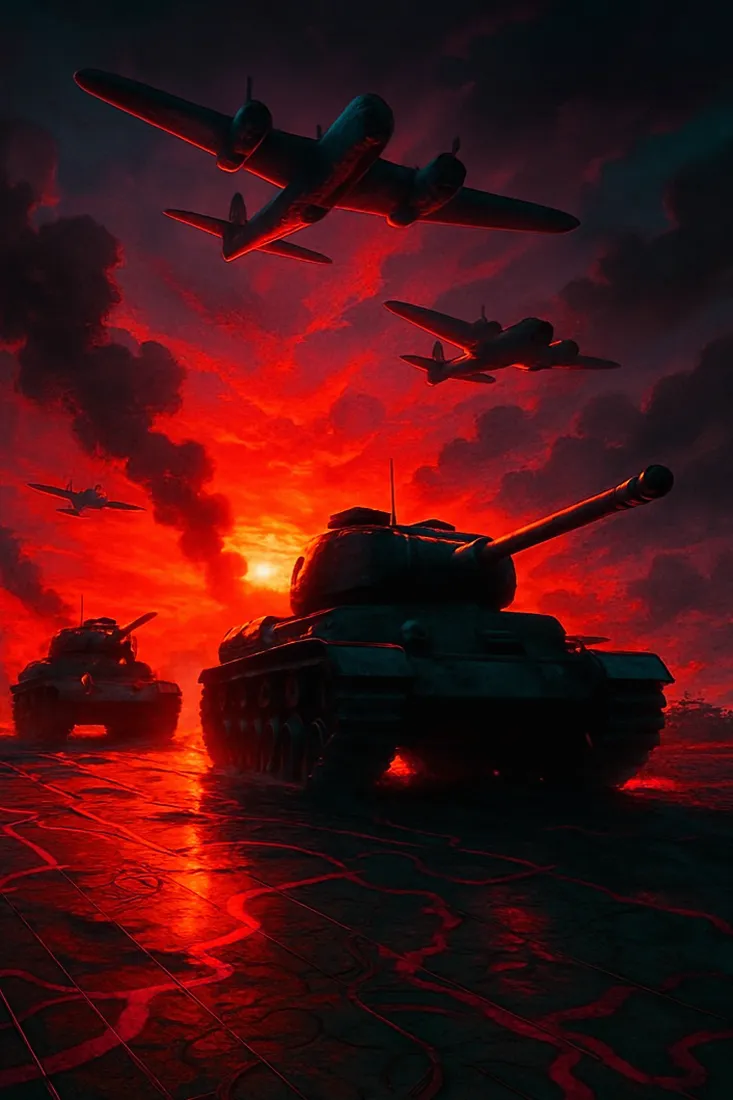
The first thing you notice in Call of War is how quiet it is. There is no countdown, no flashing reminder. Your nation sits on the map with a handful of provinces, a capital and some infantry, and the world simply begins. Units move at speeds you can measure in hours, factories take time to rise, and research ticks along in real minutes. It feels less like a video game and more like being handed a briefing pack.
That calm is deceptive, because underneath it sits a remarkably full Second World War sandbox. You are juggling an economy, a research tree, land, air and naval forces, and a set of human neighbours who are making exactly the same calculations about you. We played several rounds across different map sizes, won one, were swallowed in another and learned something sharp from both.
Doctrines give each nation a temperament
Every country you pick follows one of four doctrines: Axis, Allies, Comintern or Pan-Asian. They are not just labels. Axis units cost more but hit harder and last longer, the Comintern fields cheaper forces in large numbers, Pan-Asian armies favour speed and surprise, and the Allies reward careful optimisation. Choosing a nation therefore means choosing a style, and the same opening province can play very differently depending on what your factories are good at producing.
We liked how this nudges you towards historically flavoured play without forcing it. A Comintern player who tries to win with a small elite force will have a miserable time; one who leans into mass and attrition will feel the doctrine working with them. It also gives you something to read across the map. Knowing your neighbour’s doctrine tells you roughly what kind of army will come over the hill, which is half the fun of diplomacy.
Combined arms that actually combine
Plenty of strategy games promise land, air and sea. Call of War makes the three depend on each other. Infantry holds ground, armour breaks lines, artillery softens defences from range, aircraft scout and strike, and ships control the coasts that supply everything else. A tank stack sent alone into hills will stall; the same stack with air cover and artillery behind it tends to arrive somewhere useful.
Research is where this comes together. New equipment unlocks over real time, so you are always committing to a future, choosing which branch to push while knowing your rival is choosing too. Our best round came from investing early in reconnaissance and anti-air, which sounds dull until the neighbour’s bomber fleet arrives and simply evaporates. The game rewards that kind of thinking ahead.
Living with a map that never pauses
Rounds run over weeks, and the map keeps moving while you are at work, asleep or out for dinner. That sounds stressful, and for the first few days it is. Then you learn the rhythm: leave defensive stacks on chokepoints, queue production before bed, set your armies to arrive at sensible hours. The game becomes something you tend, like a garden with artillery.
The mobile app helps enormously. We planned major moves at a desk in the evening and used a phone for small corrections on the way in to work. Players who log in once a day can still compete, provided they plan for the gaps. Players who log in constantly will gain an edge, but less of one than you would fear, because good positioning beats frantic clicking in most fights.
Where free players stand on the front
Call of War sells a premium currency, gold, that can speed up construction and research or help in a tight spot. You will feel its presence occasionally, usually when a rival’s factories seem to rise impossibly fast. In our experience it rarely decides a round on its own. Diplomacy, good doctrine choices and steady attention carried us further than any shortcut we saw used against us.
Where the free experience is weakest is the very end of a large round, when established coalitions grind out victory points and newcomers can feel like spectators. Smaller maps and faster rounds are a good remedy, and they are where we would point anyone learning the ropes. Joining a friendly alliance early also changes the picture completely: shared intelligence is worth more than any purchase.
Week one in Call of War
- Pick a nation with a defensible coast or mountain border; geography forgives early mistakes better than any army.
- Build infrastructure and industry in your core provinces first, then start research on a basic army branch.
- Write a short, friendly message to every neighbour; peaceful borders buy you time to grow.
- Learn to set unit orders so armies arrive while you are awake, not at four in the morning.
- By the end of the week, ask to join an alliance and read how experienced players coordinate fronts.
What we love
- Doctrines make the choice of nation genuinely matter from the first hour.
- Air, land and sea depend on each other instead of being separate minigames.
- Pacing fits a working day: a few check-ins carry a whole campaign forward.
- Alliance play produces stories you will retell for weeks afterwards.
What grates
- The first two days can feel bewildering without a patient ally to explain things.
- Late in large rounds, newcomers can drift into the role of spectator.
- Premium speed-ups are occasionally visible in a rival’s suspiciously quick factories.
Where Call of War fits a life
Call of War suits anyone who has ever pored over a Second World War atlas and wondered what they would have done differently. It works best for players who enjoy planning ahead, can commit to a few short visits a day and are happy to talk to strangers on the map.
Call of War: the summing-up
This is the campaign we recommend first, and not only because it is accessible. Its doctrines, research and combined arms reward real thinking, its real-time pacing respects a working week, and its alliance play creates moments that feel like history happening to you. The rough edges are in the opening days and the long tail of large rounds, both easily softened by choosing a smaller map and a friendly coalition.